Introduction
Banarasi silk sarees are more than just garments—they’re woven symbols of India’s artistic heritage and timeless grace. Originating from the holy city of Varanasi, these sarees are famed for their luxurious silk fabric, intricate zari work in gold and silver threads, and handwoven patterns inspired by Mughal art. Their allure lies in the perfect blend of royal elegance and cultural tradition, making them a favorite choice for weddings, festivals, and special occasions. Even as fashion trends evolve, Banarasi sarees continue to reign supreme in Indian couture, effortlessly bridging the gap between classic beauty and modern sophistication. Today, their magic has transcended borders—seen gracing international runways, celebrity wardrobes, and global fashion magazines, proving that the charm of Banarasi silk is truly eternal.
👉 Explore the elegance at banarasisilksaree.in
The Origin of Banarasi Silk Sarees: A Legacy Woven Through Time
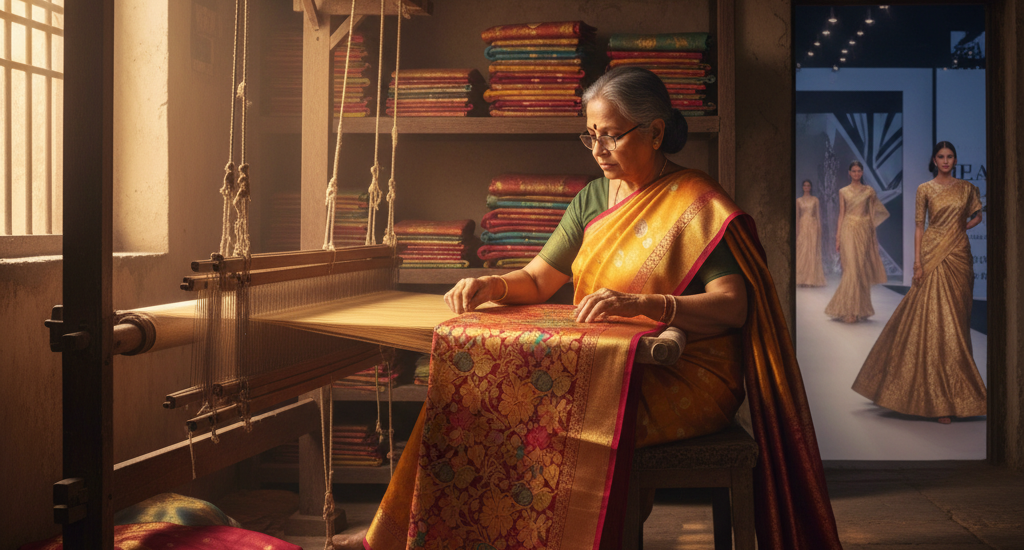
The story of Banarasi silk sarees begins in the ancient city of Varanasi (Banaras), where art, culture, and spirituality blend seamlessly. For centuries, Varanasi has been home to skilled weavers who turned simple silk threads into magnificent works of art. The craft reached new heights during the Mughal era, when Persian aesthetics met Indian craftsmanship — giving rise to the iconic motifs of floral patterns, jhallar borders, and intricate brocade work that define Banarasi designs today. Each saree reflected royal elegance, often adorned with real gold and silver threads for nobility and aristocrats. Over the centuries, weaving techniques have evolved — from traditional handlooms to more refined, intricate styles — yet the soul of Banarasi weaving remains unchanged. Today, every Banarasi silk saree carries with it not just fabric and threads, but the legacy of generations of artisans who have kept this art alive, making it an enduring emblem of India’s cultural richness.
The Art of Weaving: Craftsmanship Behind Every Saree
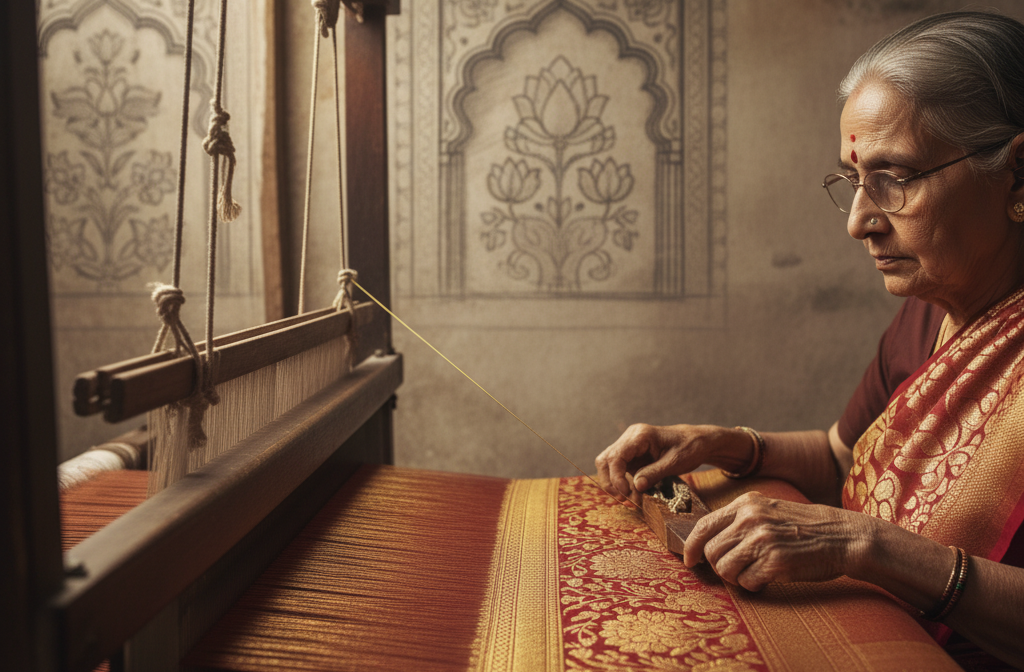
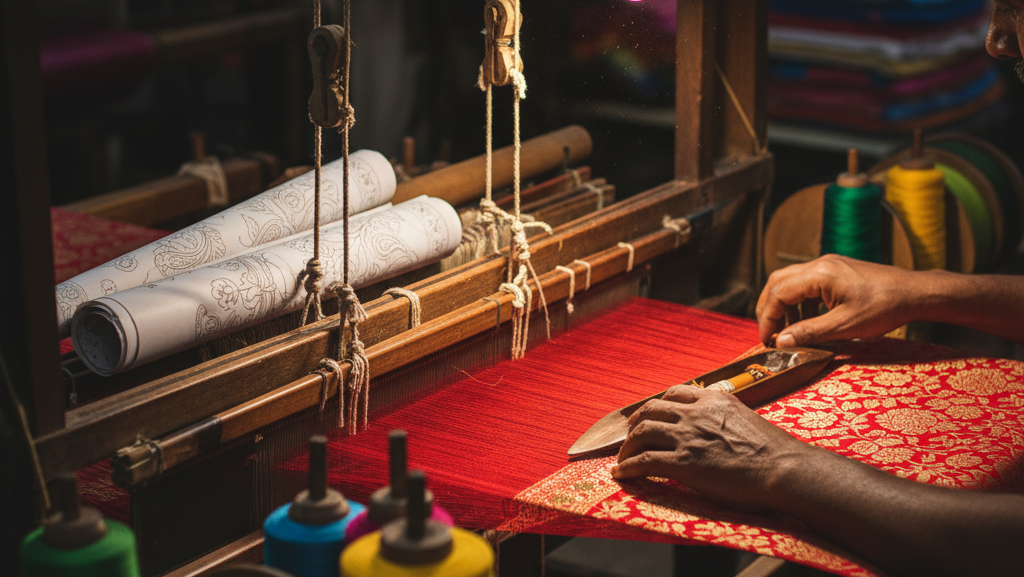
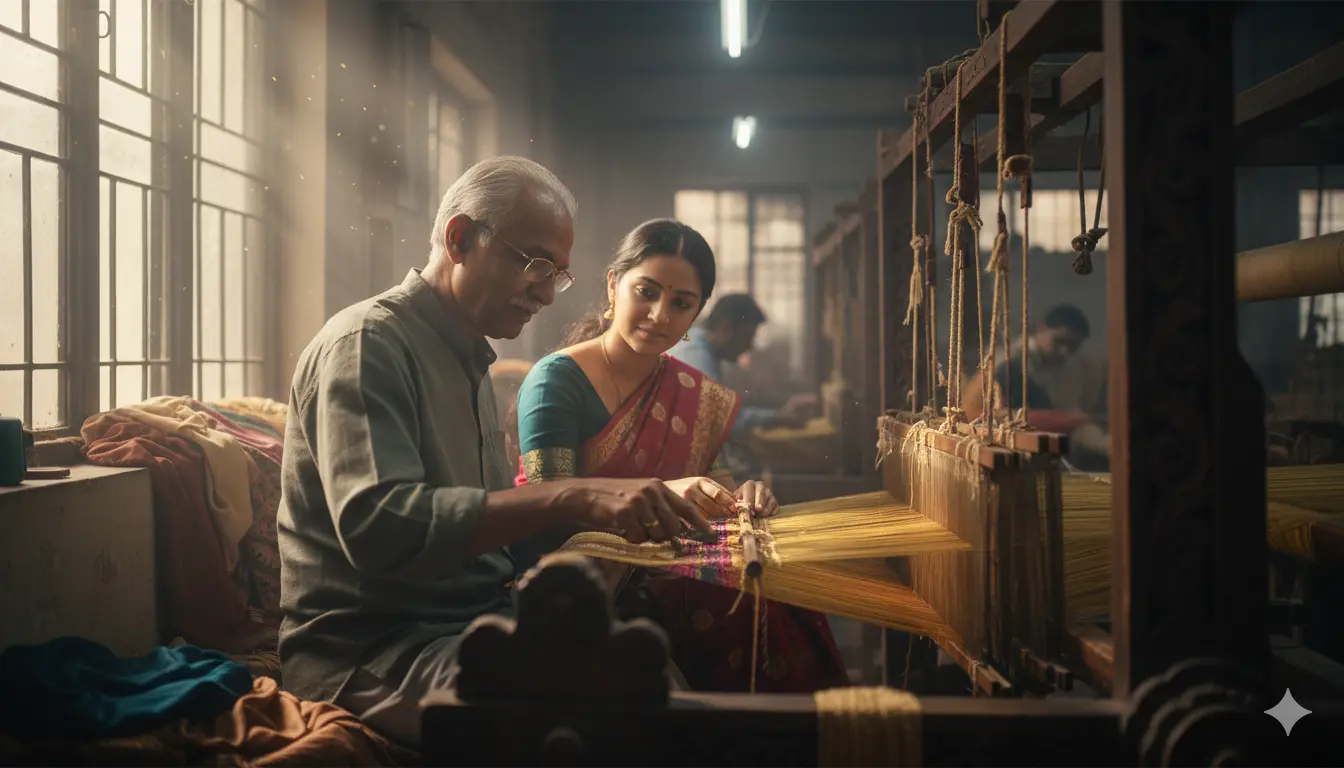
Behind every Banarasi silk saree lies an extraordinary tale of patience, precision, and artistic devotion. The journey begins with selecting the finest silk threads, which are dyed in rich colors and carefully prepared for weaving. On the traditional handloom, artisans interlace silk and zari threads — often made of gold or silver-plated copper — to create mesmerizing patterns that shimmer with elegance. Each motif, whether it’s a buti, jaal, or floral vine, is hand-drawn and translated into weaving blueprints called naksha, guiding the loom’s design. It can take anywhere from 15 days to six months to complete a single saree, depending on the intricacy of the work. What truly sets Banarasi weaving apart is the unmatched skill and dedication of Varanasi’s artisans, many of whom have inherited this craft from generations before them. Their commitment keeps alive an art form that continues to define India’s luxurious textile heritage — where every thread tells a story of timeless beauty and human touch.
Types of Banarasi Silk Sarees: A Blend of Tradition and Texture
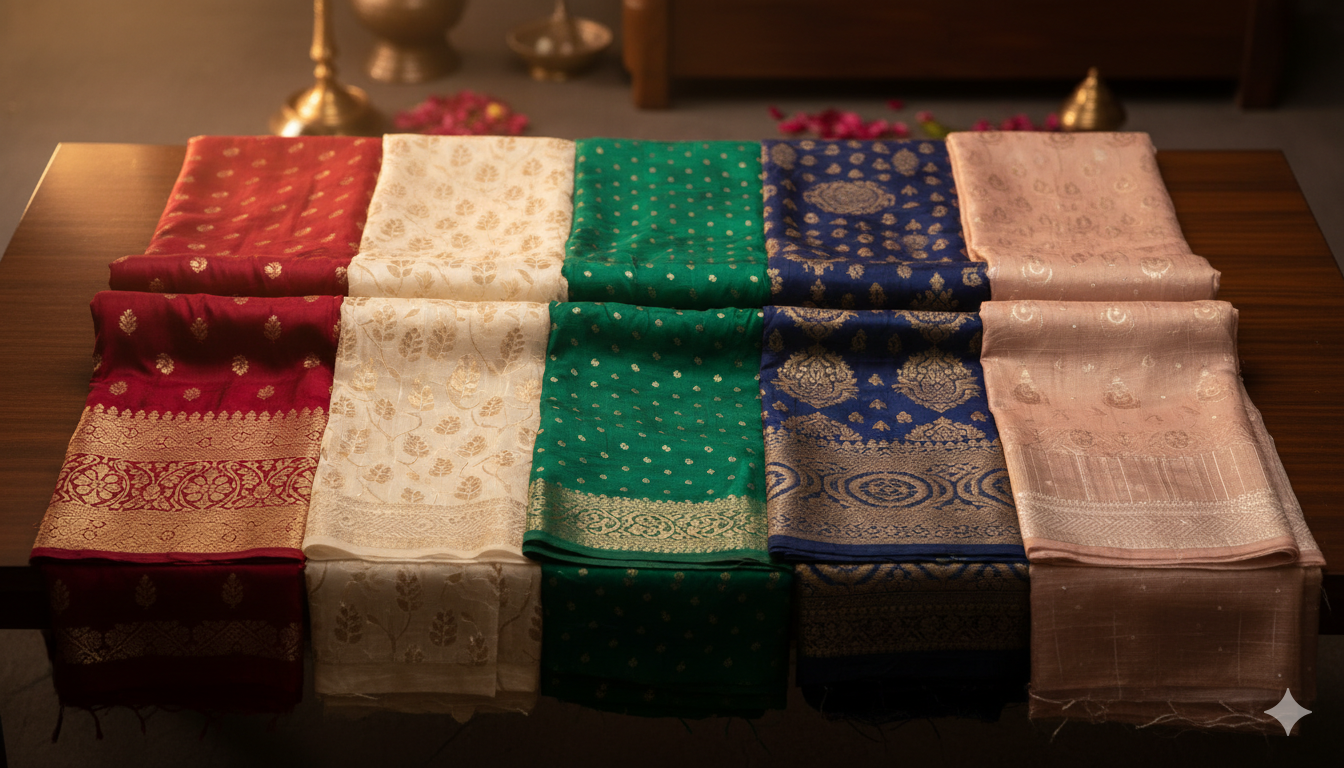
The charm of Banarasi silk sarees lies not only in their craftsmanship but also in their diverse varieties, each offering a unique texture, sheen, and personality. Among the most beloved types is the Katan Silk Saree, woven from pure silk threads that give it a rich, smooth finish and a regal drape — perfect for weddings and grand occasions. The Organza (Kora) Banarasi Saree, on the other hand, is known for its lightweight, sheer texture, and delicate zari work, making it an elegant choice for festive wear. The Georgette Banarasi Saree offers a softer, flowy fabric that blends traditional Banarasi weaving with a modern, easy-to-wear appeal. Then comes the Shattir Banarasi Saree, crafted for contemporary designs with a slightly coarse yet stylish texture, and the Tissue Banarasi Saree, often called the “Golden Saree,” that shines with metallic threads and a luminous glow, giving it a rich, glamorous look. Each type tells its own story — from the luxurious opulence of Katan to the ethereal beauty of Organza — showcasing the incredible versatility and artistry of Varanasi’s weavers.
Traditional Meets Modern: The Fashion Evolution of Banarasi Sarees
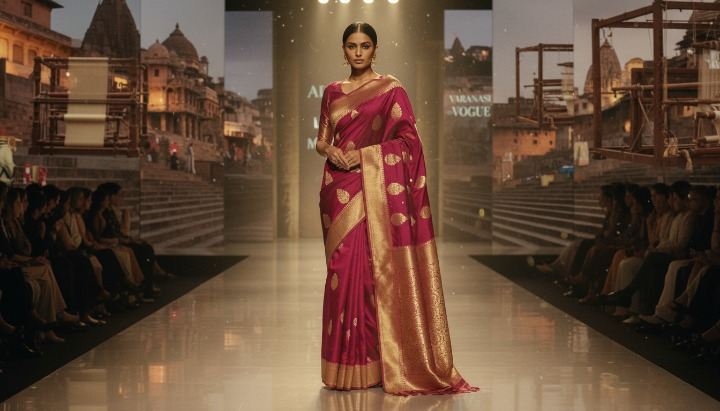
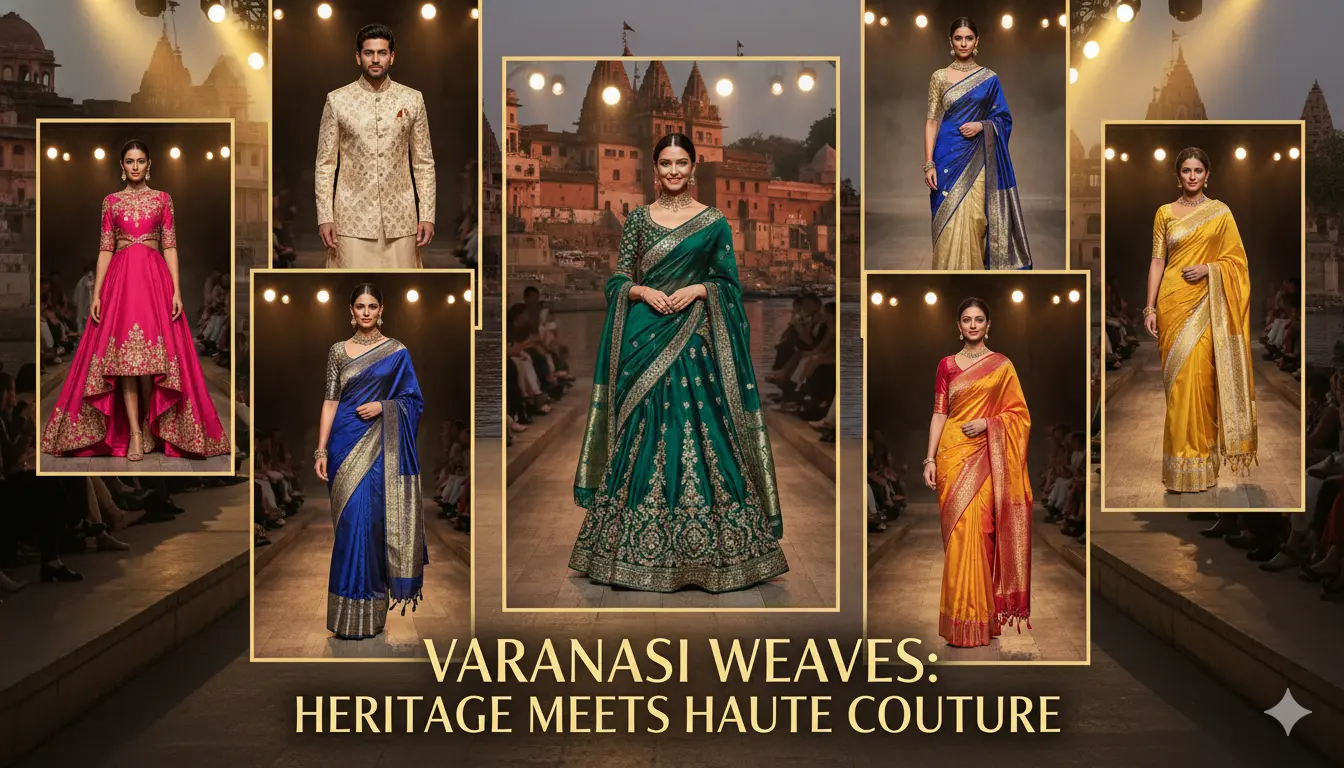
In today’s world of ever-changing fashion, Banarasi silk sarees have gracefully evolved without losing their traditional essence. Top Indian designers are giving this centuries-old weave a refreshing twist — blending classic craftsmanship with modern silhouettes. From minimalistic zari patterns to contemporary color palettes, Banarasi sarees are now being styled with crop blouses, statement belts, and even fusion jackets. The fashion industry’s love for Banarasi silk has only deepened, thanks to its presence on celebrity red carpets and global fashion shows. Icons like Deepika Padukone, Vidya Balan, and Priyanka Chopra have donned Banarasi sarees at major events, showcasing how this traditional drape can exude both heritage and high fashion. Beyond sarees, designers are exploring Banarasi lehengas, dupattas, and gowns, making the fabric a versatile favorite for modern brides and fashion enthusiasts. This perfect blend of tradition and trend has made Banarasi silk a timeless piece of art that continues to shine in every era — from royal courts to the runways of Vogue.
Global Recognition: Banarasi Saree in Vogue
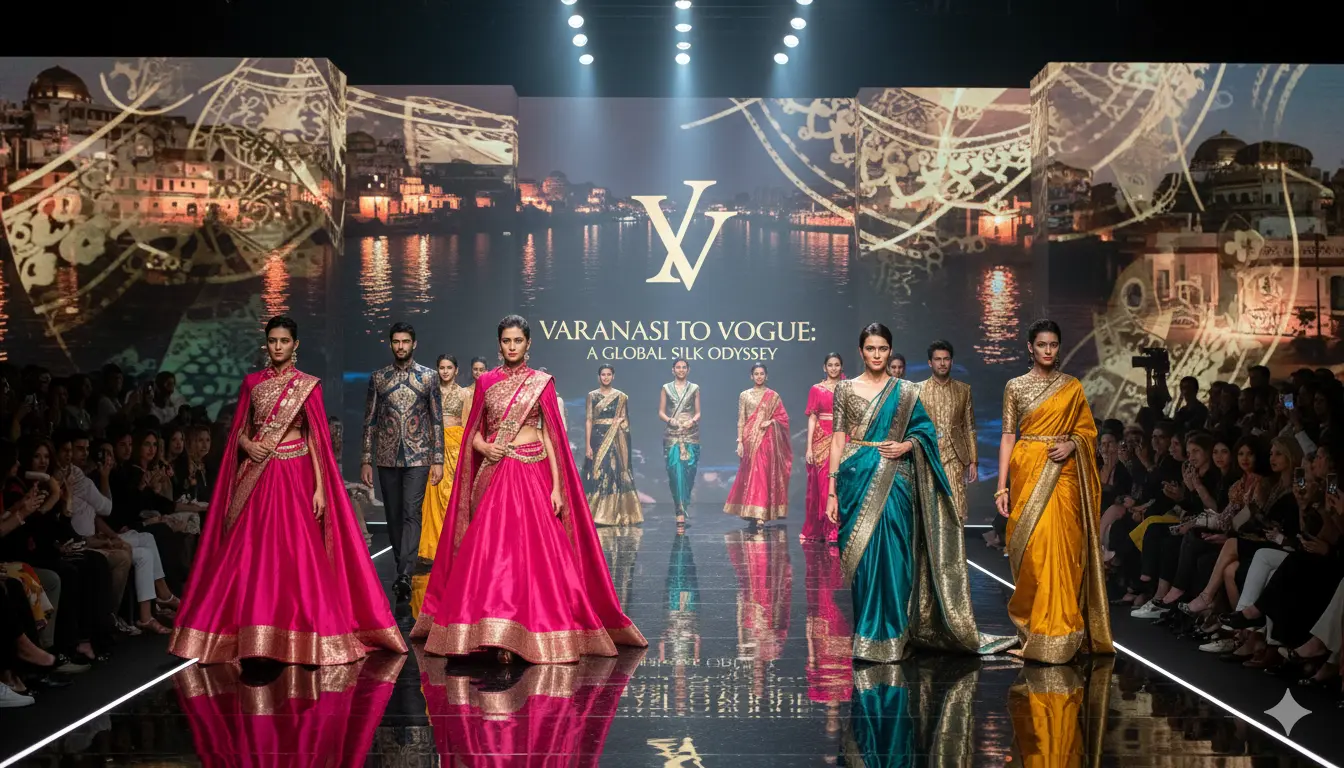
The mesmerizing allure of Banarasi silk sarees has transcended borders, capturing the attention of the global fashion industry. What was once woven exclusively in the sacred lanes of Varanasi is now celebrated by international designers and showcased at prestigious fashion events around the world. Renowned couture houses have embraced Banarasi silk for its rich texture, royal motifs, and versatility — incorporating it into luxury gowns, jackets, and even Western silhouettes. International celebrities and influencers have also played a major role in this global recognition, wearing Banarasi-inspired ensembles at film festivals, red carpets, and cultural events. Designers from Paris to New York are blending traditional Indian weaving with contemporary fashion aesthetics, proving that Banarasi silk is truly timeless. Moreover, as the world shifts toward sustainable and ethical fashion, Banarasi sarees have emerged as a symbol of slow luxury — handmade, eco-friendly, and deeply rooted in cultural heritage. Each saree represents not just elegance, but a conscious choice to support artistry, sustainability, and tradition — making Banarasi silk a true global icon of style and substance.
Buying Authentic Banarasi Sarees: A Guide to Genuine Elegance
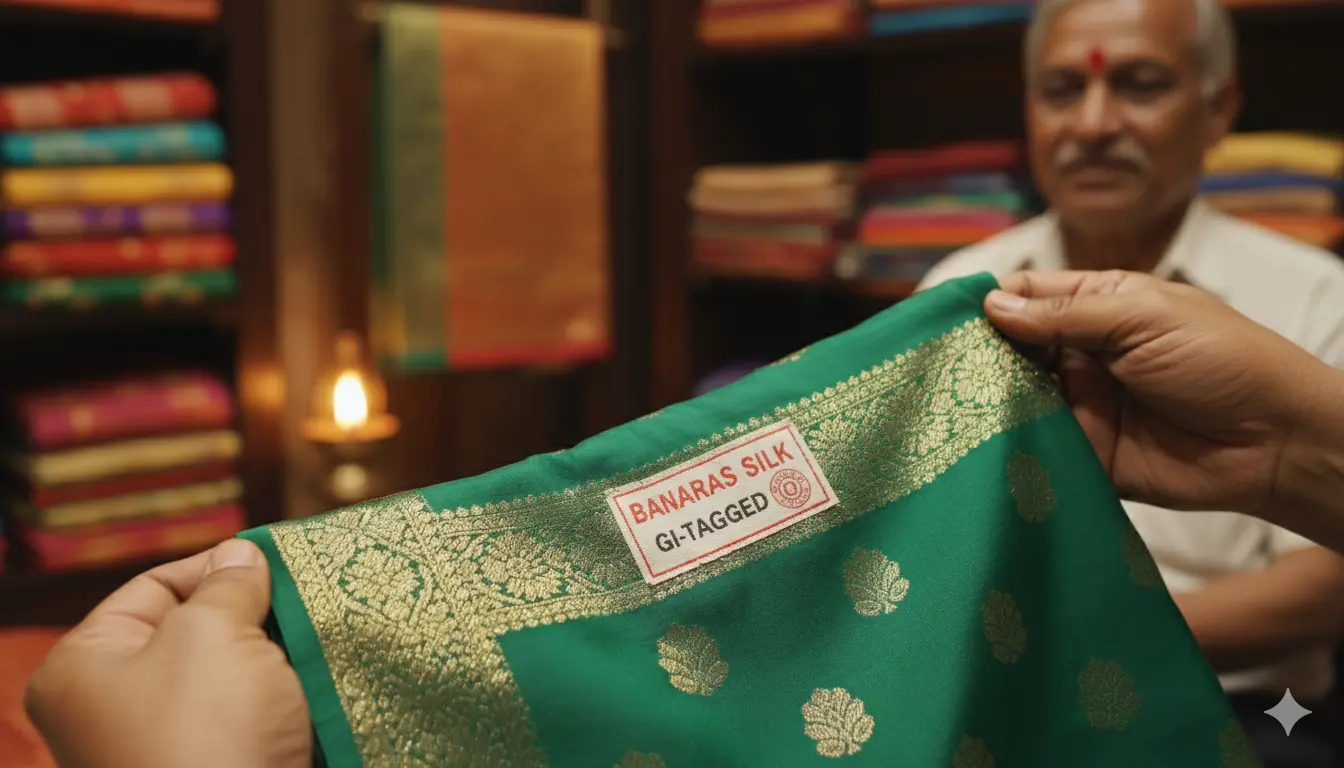
With the growing popularity of Banarasi silk, the market is now flooded with imitations — making it essential to know how to identify an authentic Banarasi saree. A true Banarasi saree is handwoven, not machine-made, and you’ll notice tiny irregularities in the weave that signify human craftsmanship. Genuine Banarasi silk feels rich and heavy due to the pure silk and zari threads used, while the reverse side reveals intricate thread work, not printed designs. Always look for the GI (Geographical Indication) tag, which certifies that the saree originates from Varanasi and meets traditional weaving standards — a mark of authenticity and heritage. When buying, it’s best to trust reputed sellers or verified online stores that specialize in traditional Banarasi weaves. One such trusted destination is BanarasiSilkSaree.in, where you’ll find authentic, handwoven Banarasi sarees crafted by skilled artisans of Varanasi. Investing in a genuine Banarasi saree isn’t just about fashion — it’s about owning a timeless piece of India’s artistic legacy that will be cherished for generations.
The Socio-Economic Impact on Weavers: The Hands That Weave Heritage
At the heart of every Banarasi silk saree lies the dedication of thousands of skilled weavers in Varanasi, whose artistry sustains not only a tradition but also entire communities. The Banarasi weaving industry provides employment to over a million artisans, including weavers, dyers, designers, and thread makers — many of whom come from families that have been practicing this craft for generations. However, in today’s fast-paced world, these artisans face serious challenges: cheap machine-made imitations, fluctuating silk prices, and a lack of fair wages often threaten their livelihood. Despite these hardships, their passion for preserving this centuries-old art remains unshaken. Various initiatives by the Indian government, NGOs, and local cooperatives are now working to revive the craft — offering design training, financial support, and digital platforms to connect weavers directly with global buyers. Brands like BanarasiSilkSaree.in also play a role by promoting genuine handwoven sarees and ensuring that artisans receive fair compensation. Together, these efforts are helping sustain a legacy that not only beautifies wardrobes but also empowers the hands that keep India’s weaving heritage alive.
Styling Tips: How to Wear Banarasi Sarees with Grace
Wearing a Banarasi silk saree is an art in itself, and styling it right can enhance its timeless beauty. For weddings and festive occasions, the classic drape with pleats neatly tucked and a pallu elegantly draped over the shoulder never goes out of style. Modern twists include cinching the saree with a belt, pairing it with a short jacket, or opting for minimalist jewelry to let the rich fabric and intricate zari work take center stage. Color choice also plays a crucial role: deep reds, royal blues, and emerald greens are perfect for grand events, while pastel shades or soft golds work beautifully for daytime functions and intimate gatherings. Accessories, hairstyle, and footwear can be subtly adjusted to complement the saree’s texture and sheen, allowing anyone to carry this heritage piece with confidence and grace.
Conclusion: The Legacy and Future of Banarasi Silk Sarees
Banarasi silk sarees are more than just garments; they are a living testament to India’s rich textile heritage. From the bustling looms of Varanasi to international fashion runways, these sarees continue to inspire designers, celebrities, and fashion enthusiasts across the globe. Their timeless appeal lies in the perfect balance of tradition, craftsmanship, and adaptability, ensuring that every generation can celebrate them in new and creative ways. Truly, “From Varanasi’s looms to the world’s runways, Banarasi silk is not just fabric — it’s a legacy of luxury.”