Introduction
In the heart of India, where the holy Ganges flows, a legacy of luxury is woven thread by thread. The Banarasi silk saree is not merely an attire; it is a poetic symphony of art, culture, and heritage. For centuries, these sarees have been the epitome of elegance, gracing brides and fashion connoisseurs alike with their timeless charm. Their journey from the ancient, narrow lanes of Varanasi to the dazzling global runways is a testament to their enduring appeal. This isn’t just a story of fabric; it’s the story of dreams woven in silk and gold.
Historical Roots of Banarasi Silk
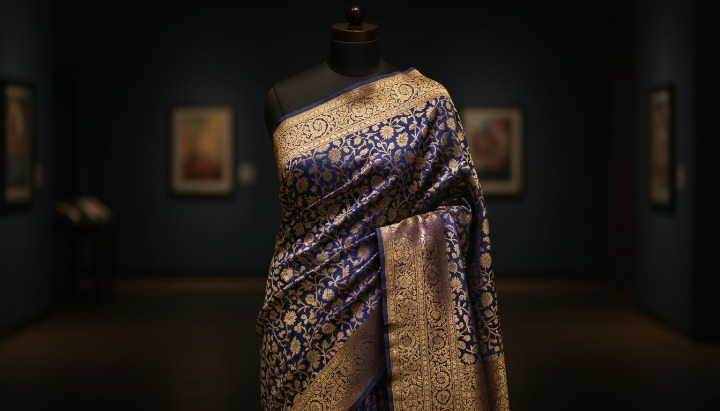
Varanasi, one of the world’s oldest living cities, has been the cradle of weaving for over 2,000 years. The city’s air is thick with the scent of incense and the rhythmic clatter of looms. The weaving culture here is not an industry; it is a way of life, passed down through generations like a cherished family secret. The artistry we admire today was profoundly shaped by the Mughal era, which introduced intricate floral patterns, intricate jaal (nets), and motifs like the kalga (paisley) and butis (small florals). Over the centuries, these techniques evolved, blending Persian sensibilities with Indian mythology to create a visual language that is uniquely Banarasi.
The Craftsmanship Behind Every Saree
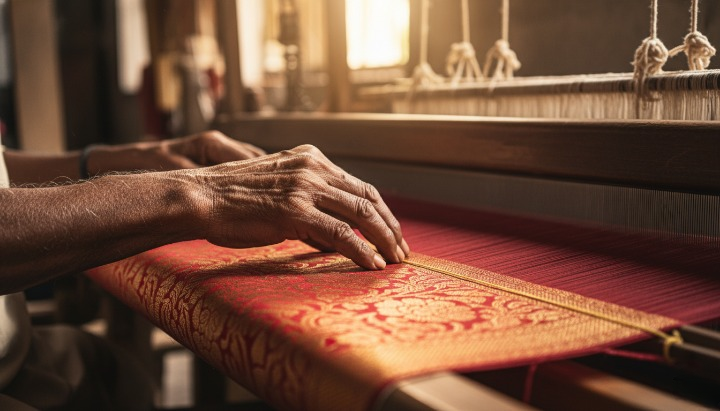
To understand a Banarasi saree is to appreciate the human endeavor behind it. The process begins with the purest silk threads, which are then dyed in vibrant hues. The real magic, however, lies in the handloom. Using a pit loom, the weaver, often working in a dimly lit room, interlaces the silk weft with the dazzling zari (a thread made of fine silver or gold coated with gold). This is a painstakingly slow process, with a single saree taking anywhere from 15 days to six months to complete. The dedication is immense, with artisans often working for hours to weave just an inch of the elaborate pallu. This isn’t a job; it’s a generational legacy, where the soul of the weaver becomes one with the fabric.
Types of Banarasi Silk Sarees
Not all Banarasi silks are created equal. Each type has its own personality and charm:
- Katan Silk Saree: The classic. Made from pure, twisted silk threads, it is firm, lustrous, and the foundation for the heaviest zari work.
- Organza (Kora) with Zari and Silk: A sheer and lightweight fabric, where the transparency of the organza is beautifully contrasted with opulent zari borders and patterns.
- Georgette Banarasi Saree: A more modern variant, georgette allows for detailed designs at a more accessible price point, making the grandeur of Banarasi work wearable for a wider audience.
- Shattir and Tissue Banarasi Sarees: These are for special occasions. Tissue sarees use golden or silver threads in the body, while Shattir is a sophisticated art of weaving patterns on sheer fabric, creating an ethereal effect.
Traditional Meets Modern
The Banarasi saree has gracefully stepped into the 21st century. Contemporary designers are deconstructing it, experimenting with bold colors, minimalist zari, and unconventional silhouettes. From Deepika Padukone’s wedding trousseau to international red-carpet appearances, the saree has been embraced by global celebrities. The fusion wave has also given birth to Banarasi lehengas with elaborate trailblazers, statement dupattas for anarkalis, and even elegant gowns that incorporate the iconic brocade, making this ancient craft relevant for the modern wardrobe.
6. Global Recognition
From the hallowed halls of Parisian fashion weeks to the displays in luxury boutiques in New York, Banarasi silk has earned its place as a global luxury statement. International designers are collaborating with Varanasi weavers to create exclusive collections. In a world moving towards conscious consumption, the handwoven, natural-fiber Banarasi saree stands out as a symbol of sustainable and ethical luxury, telling a rich story with every wear.
Buying Authentic Banarasi Sarees
With popularity comes imitation. To ensure you’re buying an authentic piece, look for the GI (Geographical Indication) tag, which certifies its origin from Varanasi. Genuine Banarasi silk is soft yet heavy, with zari that is real or of high-quality tested composition. The reverse side of the motifs will be as clean and detailed as the front. For a trusted selection, platforms like banarasisilksaree.in specialize in curating authentic, GI-tagged sarees directly from the weavers.
Socio-Economic Impact on Weavers
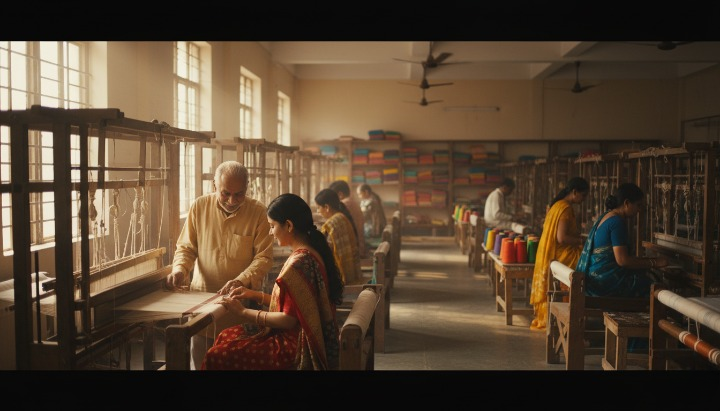
Behind the beauty lies a struggle. The weaving community of Varanasi, while immensely skilled, faces challenges like rising raw material costs, competition from power looms, and inadequate market access. However, growing awareness and initiatives by the government and NGOs to promote direct-to-consumer models and e-commerce are creating a positive impact. By choosing an authentic, handloom Banarasi, you are not just buying a saree; you are sustaining a community and preserving an art form.
Styling Tips
- For Weddings: Go for a classic red or gold Katan silk with a traditional drape, paired with temple jewelry and a maang tikka for a regal look.
- For Festive Occasions: Experiment with jewel tones like emerald green, peacock blue, or deep magenta. Style a Banarasi saree with a contrasting blouse and statement chandelier earrings.
- Modern Twist: Drape your saree in the dhoti-style or Gujarati-style, and pair it with a belt, a tailored jacket, and mojris. Keep the jewelry minimal—a single statement necklace or chandbalis (large circular earrings) will suffice.
Conclusion
The Banarasi silk saree is more than just a piece of clothing; it is a woven chronicle of Indian history, a canvas of artistic expression, and a legacy of unparalleled craftsmanship. As it continues to inspire designers and wearers across the globe, its future looks as luminous as its zari. From Varanasi’s looms to the world’s runways, Banarasi silk is not just fabric — it’s a legacy of luxury.